Loading…
Live Fire & Burn Training · Comparison
Liner Comparison
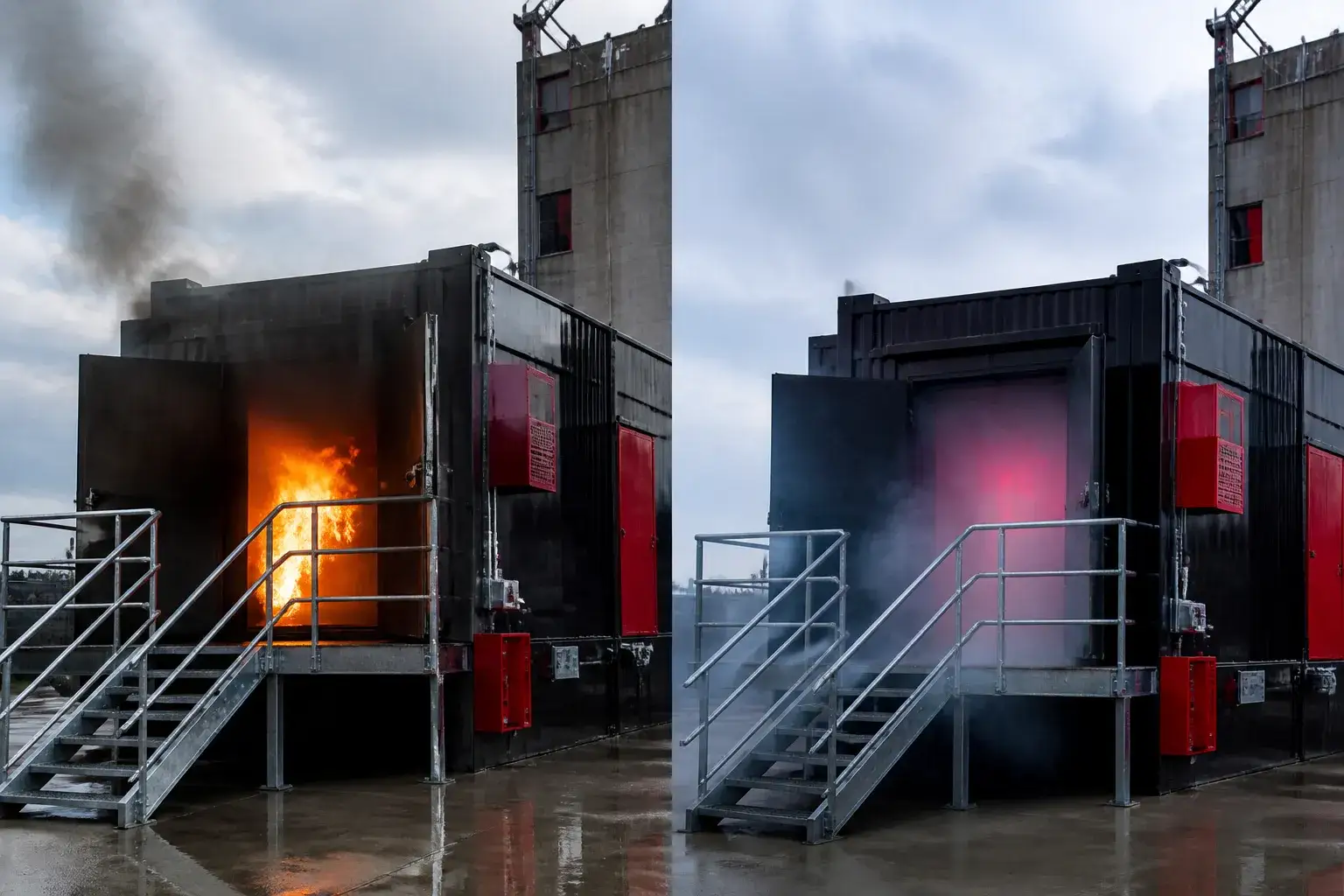
Interlocking thermal liners vs. traditional liners — plus a decision guide for live-fire liners vs. fire simulation.
Decision guide
When to choose liners vs. simulation
Live-fire liners and fire simulation serve different training goals. Many agencies combine both — here's how to decide.
Choose interlocking liners / live fire when…
- Training fire behavior, flashover recognition, and hose stream tactics
- Building or retrofitting a dedicated burn room or CFBT facility
- Needing realistic heat, smoke layers, and structural fireground conditions
- Meeting NFPA 1403/1402 live-fire training requirements
- Running advanced interior attack and ventilation control drills
Choose fire simulation when…
- High-frequency equipment handling and initial attack training
- Indoor or densely populated sites with strict emissions requirements
- Public education, workforce training, and evacuation drills
- Needing rapid reset between sessions without solid fuel or liner wear
- Complementing live-fire facilities for routine, cost-effective drills
System comparison
Interlocking vs. traditional liners
| Comparison item | Interlocking thermal liner | Traditional liner |
|---|---|---|
| Installation | Interlocking assembly; fast on-site construction | Masonry or cast-in-place; long schedule |
| Repair & replacement | Individual panel replacement; localized repair | Large-area removal required; high repair cost |
| Insulation performance | Calcium-silicate material; excellent back-face temperature control | Cracking and insulation degradation over time |
| Structure protection | Effectively protects primary steel structure | Heat transfers to structure after cracking |
| Service life | Withstands repeated high temperatures; long-term stability | Degrades after repeated high-temperature cycles |
| Retrofit compatibility | Upgrade path for existing burn rooms | Difficult to retrofit |
2018
Founded
13
Product Lines
6
Service Domains
4
Product Families
Retrofit upgrade
Existing burn room retrofit process
Whatever the current condition, interlocking thermal liners can transform aging burn rooms into modern training facilities—replaceable panels and easier maintenance.
01
Site assessment
Survey existing burn room structure and liner wear; evaluate retrofit feasibility.
02
Design
Custom interlocking liner layout and connection details sized to the burn room.
03
Demolition & prep
Remove aged liner; prepare steel substrate for installation.
04
Interlocking installation
Assemble new liner panels quickly to minimize training downtime.
05
Acceptance & handover
Inspection and functional verification; deliver a burn room ready for live-fire training.
Turnkey Service
From Concept to Completion, We Are With You
As an integrated supplier, we bring design, manufacturing, installation, and after-sales together — one-stop coordination with clear follow-through.
- 01
Needs Assessment
We review your site, training objectives, team size, and budget to define clear project goals.
- 02
Solution Design
Engineers and fire experts co-design layouts, props, and structures for realism and compliance.
- 03
Manufacturing
Factory-built with quality control at every step for long-lasting components.
- 04
On-Site Installation
Professional turnkey installation from foundations through final handover.
- 05
Training & Delivery
User training and acceptance so your team can operate effectively from day one.
- 06
After-Sales Support
Long-term maintenance, parts supply, and compliance checks to protect your investment.
Evaluate your burn room retrofit
Book a consult to compare liner options and decide the right mix of live fire and simulation.